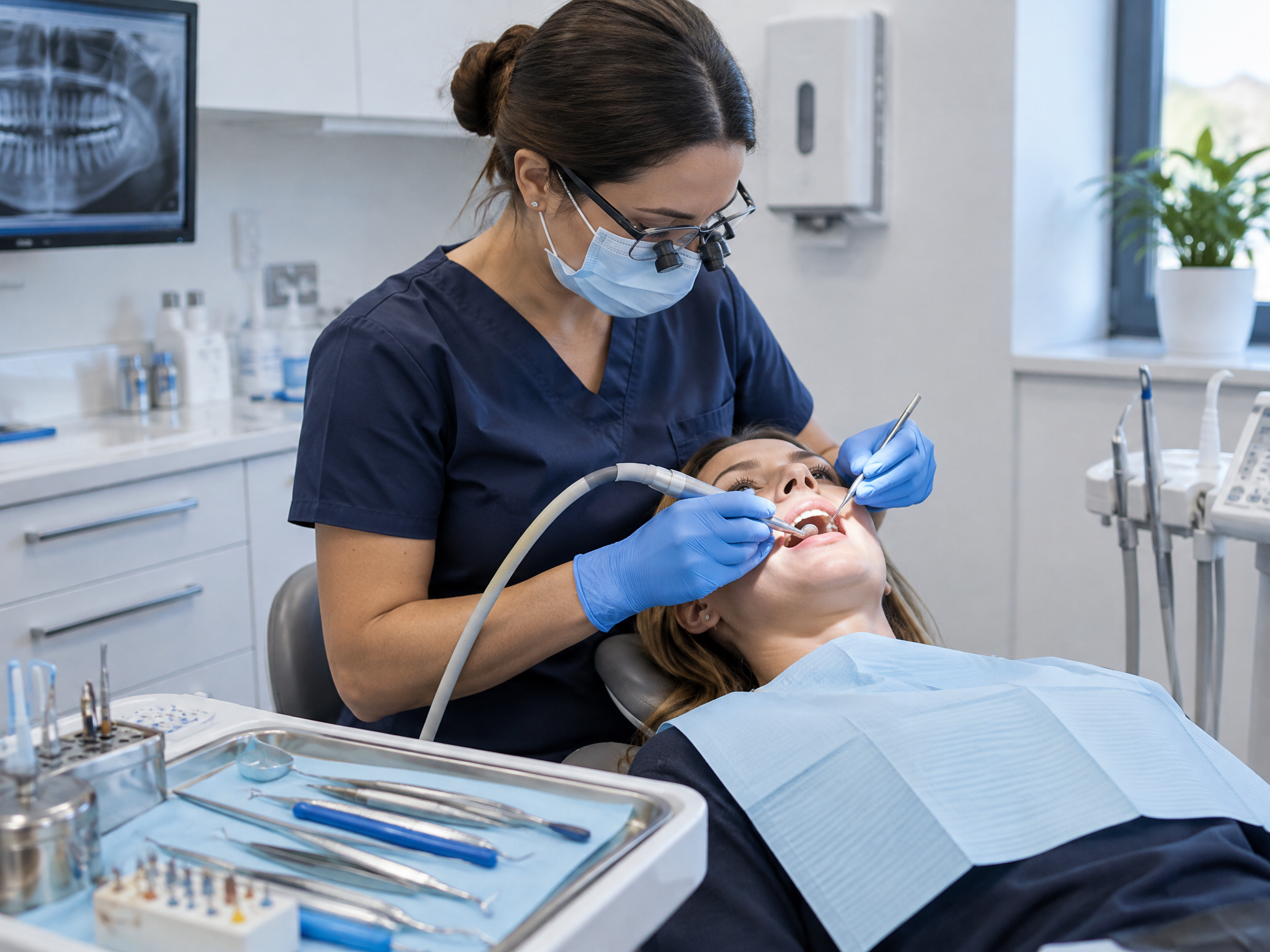
Emergency Root Canal Therapy in West Palm Beach
A root canal saves a tooth that would otherwise need to be pulled. If you have deep, throbbing tooth pain or signs of an infected nerve, our team can treat you the same day.
Call (561) 770-6796What Is a Root Canal and Why Might You Need One?
A root canal is a procedure that removes infected or damaged tissue from inside a tooth. Every tooth has a soft center called the pulp, which contains nerves, blood vessels, and connective tissue. When the pulp becomes infected or inflamed, it causes intense pain and can lead to an abscess if left untreated.
Common causes of pulp damage include deep cavities that have reached the nerve, cracks or chips in a tooth that let bacteria inside, repeated dental procedures on the same tooth, and trauma from an impact or injury. Sometimes a tooth needs a root canal even without an obvious cavity, because the nerve has died from an old injury.
The signs that you may need a root canal include: severe, persistent pain in a specific tooth (especially pain that wakes you up at night), prolonged sensitivity to hot or cold that lingers after the stimulus is removed, darkening of a tooth, swelling or tenderness in the nearby gums, and a small pimple-like bump on the gum near the painful tooth.
Without treatment, the infection can spread from the tooth into the surrounding bone and tissue. A root canal stops this process, eliminates the pain, and saves the natural tooth so you avoid the cost and inconvenience of extraction and replacement.
What Happens During Root Canal Treatment
Root canal treatment has an undeserved reputation. With modern techniques and effective anesthesia, the procedure itself is no more uncomfortable than getting a filling. Here is what actually happens.
First, we take digital X-rays to see the extent of the infection and the shape of the root canals. Then we numb the tooth and surrounding area completely. You will not feel pain during the procedure.
We place a small rubber dam around the tooth to keep the treatment area dry and free of saliva. Then we create a small opening in the top of the tooth to access the pulp chamber. Using specialized instruments, we carefully remove the infected or damaged pulp tissue from the chamber and the root canals.
After removing the pulp, we clean and shape the inside of the canals to prepare them for filling. We irrigate the canals with an antibacterial solution to eliminate any remaining bacteria. Then we fill the canals with a biocompatible material called gutta-percha and seal the opening.
In most cases, the tooth will need a crown afterward to protect it from fracturing. We can place a temporary crown the same day and schedule a follow-up for the permanent crown.
Recovery and Aftercare
Most patients feel significant relief from their tooth pain immediately after the root canal is completed. The intense, throbbing pain from the infection is gone because the nerve tissue has been removed.
Some soreness around the treated tooth is normal for 2 to 3 days. This is a response to the procedure itself and is easily managed with over-the-counter pain medication like ibuprofen. The soreness should decrease each day.
Avoid chewing on the treated tooth until your permanent crown is placed. The tooth is more fragile after a root canal, and biting down on something hard could crack it. Stick to softer foods on the opposite side of your mouth.
Continue your normal brushing and flossing routine, but be gentle around the treated area for the first few days. If we prescribed antibiotics, finish the entire course even if you feel better.
Call us if you experience increasing pain after the first 3 days, visible swelling, an allergic reaction to medication, or if the temporary filling or crown falls out. These situations are uncommon but we handle them quickly.
Cost and Insurance Coverage
Root canal treatment costs depend on which tooth is affected. Front teeth have one canal and are simpler to treat, typically costing $700 to $1,000. Premolars have one or two canals and cost $800 to $1,200. Molars have three or four canals and range from $1,000 to $1,500.
These costs do not include the crown that is usually needed afterward. Crown costs range from $800 to $1,500 depending on the material.
Most dental insurance plans cover a significant portion of root canal treatment because it is classified as a necessary procedure. We verify your insurance benefits before treatment and give you a clear estimate of your out-of-pocket cost.
For patients without insurance, we offer flexible payment options. A root canal is almost always less expensive than extraction followed by a dental implant or bridge, so saving the tooth is often the most cost-effective choice.
Warning Signs: Call Us Immediately
- 1Severe, constant tooth pain that throbs or pulses
- 2A tooth that hurts more when you bite down or apply pressure
- 3Prolonged sensitivity to hot or cold that lasts minutes, not seconds
- 4A darkened or discolored tooth
- 5Swollen, tender gums near a specific tooth
- 6A recurring pimple or bump on the gum near a tooth
- 7Facial swelling on one side
What to Do Right Now (Before You Reach Us)
Take anti-inflammatory medication
Ibuprofen (400 to 600 mg) helps reduce both pain and inflammation. Take it with food.
Avoid hot foods and drinks
Heat can intensify pulp pain. Stick to room-temperature or cool foods and beverages.
Do not apply aspirin to the gum
This folk remedy can burn gum tissue. Take pain medication orally instead.
Call us right away
Call (561) 770-6796. An infected tooth nerve will not heal on its own. The sooner we treat it, the better the outcome.
Frequently Asked Questions
Related Emergency Services
Get the Treatment You Need Today
Our West Palm Beach emergency dental team is standing by. Call now or fill out the form for a callback.
Call (561) 770-67967720 Beta Cir, West Palm Beach, FL 33406
Request a Callback
This content is for informational purposes only and does not constitute medical advice. In a dental emergency, call us at (561) 770-6796 or dial 911.